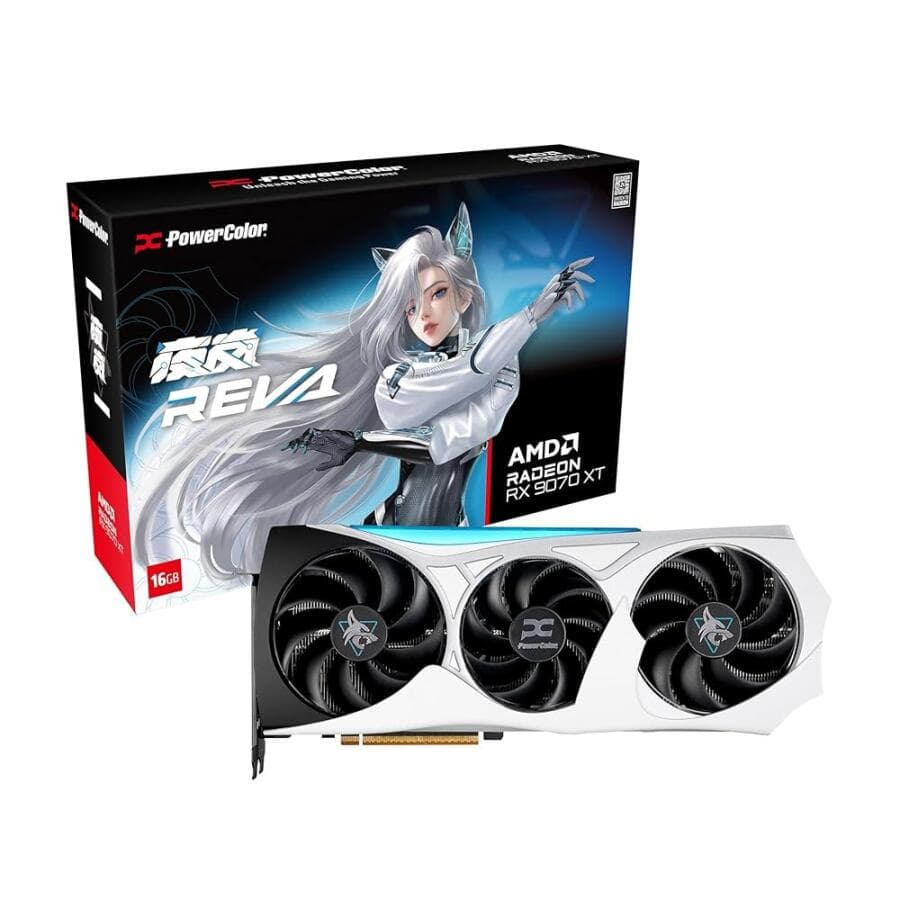
Radeon RX 9070 XT
AMD's RX 9070 XT is the RDNA 4 card that put the company back in the high-refresh 1440p and entry-4K conversation, with a large 16GB GDDR6 buffer and much-improved ray tracing over the previous generation.
Read the product overview
It typically trades blows with NVIDIA's mid-to-upper tier in rasterization while undercutting on price, and the new FSR upscaling closes much of the image-quality gap. It still uses traditional 8-pin power connectors, which many builders prefer for cable safety, and it is a strong value pick for gamers who do not need NVIDIA's CUDA ecosystem for creative or AI work.
How does this price compare?
eBay · Observations in the last 90 days
Where to buy
Display prices are converted and rounded from collected prices. Check shipping, configuration and the final total at the retailer.
Key specs
| GPU Chip | AMD RDNA 4 Navi 48 |
|---|---|
| Video Memory | 16GB GDDR6 |
| Boost Clock | 2970 MHz |
| Power Draw (TBP) | 304 W |
| Card Length | 287 mm |
| Power Connector | 2x 8-pin PCIe |
| Display Outputs | 2x DisplayPort 2.1a, 1x HDMI 2.1b |
| Memory type | GDDR6 |
| Bus width | 256-bit |
| Process node | TSMC N4 (4nm) |
Configurations: Reference-spec model · AIB overclocked model
Strengths
- Strong 1440p value with 16GB VRAM
- Big ray-tracing gains over prior RDNA
- Familiar dual 8-pin power, no 12V-2x6 worries
Trade-offs
- Weaker for CUDA-based creator and AI work
- Upscaling quality trails NVIDIA in some titles
- GDDR6 has less bandwidth than GDDR7 rivals
Alternatives to consider

How we assess prices
We use in-stock offers checked within 72 hours. Scores compare the current offer with that retailer’s observations from the last 90 days, requiring at least 14 observed days and a price from about 30 days ago. Suspect records withhold the score. Retailer conditions and prices can change.